
Blog
Why privacy-first wallets matter: comparing Litecoin MWEB, Monero, and mixed-asset approaches
Surprising fact: adding a privacy layer does not always make a transaction private in practice — it changes the attack surface. For many U.S.-based users chasing confidentiality, the real decision is not “private or not” but “which privacy mechanics trade off which risks.” This article walks through three live options many privacy-conscious people consider today: Litecoin with its optional MWEB layer, native Monero wallets, and multi-currency privacy wallets that mix protocols and tools. The goal is practical: explain how each approach works at the protocol and UX level, name the realistic limits, and give a decision heuristic you can reuse.
The comparisons below are grounded in concrete mechanisms — coinjoins and MWEB kernels for Litecoin, ring signatures and stealth addresses for Monero, and node/Tor choices and client-side key control for multi-currency wallets. I assume a U.S. context where regulatory attention, law enforcement requests, and exchange compliance matter to how privacy practices play out. That matters because privacy is often contested at the endpoints (exchanges, IP leaks, metadata), not just at the blockchain layer.
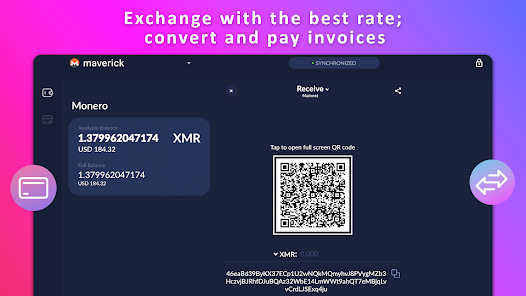
Core mechanics — how privacy actually happens for each option
Understanding the underlying mechanisms is the best way to judge trade-offs. Monero uses ring signatures, stealth (one-time) addresses, and confidential transactions by default; these are intrinsic privacy primitives baked into the protocol that obfuscate sender, receiver, and amount. Litecoin’s privacy option — MimbleWimble Extension Blocks (MWEB) — is an optional, separate extension block that enables confidential transactions and aggregation of kernels, which can hide amounts and obscure linkages when used. Multi-currency wallets do not change protocol privacy: they combine different asset-specific tools (e.g., Monero subaddresses and Litecoin MWEB toggles) and add network-level protections like Tor or I2P and node selection to limit metadata leakage.
Mechanism distinction matters. Monero’s privacy is continuous and pervasive: every transaction is private by default. MWEB is opt-in and layered: only transactions placed into the MWEB extension block gain the additional confidentiality. That means behavior matters — toggling MWEB on makes a big difference, while continuing to use legacy Litecoin transactions does not.
Practical trade-offs and where each approach breaks
Here are the primary trade-offs to weigh, with specific mechanisms and realistic failure modes.
Monero (native privacy): strong on-chain anonymity because sender, receiver, and amount are obfuscated. The wallet-level controls that matter: keeping the private view key on-device, using subaddresses per counterparty to reduce address reuse, and background synchronization to avoid manual node metadata leaks. Limits: Monero leaks can still occur at endpoints — if you reveal a transaction to an exchange or reuse an address, privacy collapses. Also, Monero’s heavier cryptography means larger transaction sizes and different UX constraints on mobile. Compliance scrutiny in the U.S. is higher for privacy coins, which can affect exchange access or on-ramp options.
Litecoin + MWEB (optional privacy): MWEB can provide confidential transactions and better fungibility when activated. The advantage is that users on a widely accepted coin like Litecoin may gain privacy while benefiting from a broadly available on-ramp and ecosystem. The downside is twofold: 1) opt-in nature — if a user or counterparty doesn’t use MWEB, linkage remains; 2) integration and compatibility — some services and exchanges may not accept MWEB outputs or may require unshielding; that can force an address reuse or reveal. Technically, MWEB’s privacy relies on aggregation of kernels and confidential values, but the extension design means there are separate blockspaces and interoperability edges that can leak metadata unless users understand how to stay within MWEB flows.
Multi-currency privacy wallets (protocol-agnostic client with privacy features): they offer convenience — swap inside the app, seamless support for multiple coins, hardware wallet integration, and network privacy options (Tor-only mode, I2P, custom node selection). The key advantage is operational privacy: zero telemetry, device-level encryption, and the ability to route through Tor or select nodes you trust. The trade-off is complexity: different coins have different privacy guarantees and threat models. A wallet that supports both Monero and Bitcoin must keep the Monero private view key local and manage UTXO coin control for Bitcoin; misconfigured swaps or cross-chain routing could accidentally reveal linkage, especially if the decentralized swap routing (e.g., NEAR Intents) touches market makers or liquidity providers whose policies vary.
Endpoint risks: the privacy chain is only as strong as its weakest link
Many privacy leaks happen outside the protocol. Consider four common endpoints: IP addresses, on-ramps/exchanges, device backups, and user behavior. Network protections (Tor-only mode, I2P proxy support, custom node connections) directly reduce IP-based correlation risk. A wallet that defaults to Tor-only or makes it easy to pick a trusted node is materially better at protecting network metadata. But even with Tor, if you deposit to a KYC exchange tied to your identity, the blockchain privacy benefits can be undone. Likewise, a zero-telemetry policy and non-custodial open-source client preserve privacy legally and technically — but they cannot prevent users from accidentally revealing keys via cloud backups or social sharing.
In the U.S., regulatory and compliance pressure can create indirect privacy harms: exchanges might delist privacy coins or require stronger provenance checks for shielded outputs. That does not invalidate on-chain privacy mechanics, but it does affect liquidity and the practical ability to move funds. Users should view protocol privacy and ecosystem friction as two orthogonal dimensions to optimize jointly.
Decision framework: a simple heuristic for U.S. privacy-focused users
To choose, ask three questions in order and follow the highest-priority answer.
1) Do you need default, strong on-chain anonymity for routine peer payments? If yes, favor Monero-native wallets and strict endpoint hygiene (no KYC exposures, subaddresses per counterparty, local key retention).
2) Do you need broader liquidity and occasional privacy for a widely accepted coin? If yes, Litecoin with MWEB can be a good fit — but only if you consistently use MWEB outputs and confirm counterparties accept them. Expect operational limits when moving to or from non-MWEB services.
3) Do you value convenience across assets while keeping keys non-custodial and network metadata minimized? Then a multi-currency privacy wallet that is open-source, supports Tor/I2P, integrates hardware wallets, and enforces zero telemetry will be the best pragmatic choice. Use coin-control, payjoin, and swap features carefully — and remember that cross-chain swap routing introduces additional parties you must evaluate.
Where wallets like Cake Wallet fit in — strengths and constraints
Some modern wallets combine these strengths: non-custodial key management, device-level encryption (Secure Enclave / TPM), Tor-only and I2P modes, and integration with hardware wallets. For someone in the U.S., these features reduce many of the common operational risks: they prevent developer-side telemetry from leaking, limit IP exposure, keep private view keys on-device for Monero, and provide optional privacy layers like Litecoin MWEB and Bitcoin PayJoin v2.
But constraints remain. Optional privacy means user behavior matters; mandatory shielding for coins like Zcash might protect against accidental leaks but also complicate migrations from other wallet types. Cross-chain swaps that look convenient (using NEAR Intents or similar decentralized routing) are useful, yet they expose a surface of market makers and liquidity providers whose privacy practices differ. In short: a capable wallet reduces accidental leaks and centralization risk, but it cannot substitute for mindful operational security and an understanding of each protocol’s limits. If you want to try such a wallet, you can find the official client for multiple platforms here: cake wallet download.
Concrete heuristics and a short checklist before you transact
1. Always protect the endpoint: enable Tor/I2P or select a trusted node; avoid public Wi‑Fi for sensitive moves. 2. Use subaddresses (Monero) and fresh MWEB outputs (Litecoin) per counterparty to avoid linkages. 3. Keep private view keys and seed phrases off cloud backups; prefer encrypted local backups or hardware wallets. 4. When using swaps, review the routing and counterparty exposure: decentralized routing reduces single points of failure but increases the list of entities that see trade metadata. 5. Test small before large — send small amounts between a controlled set of addresses to observe how counterparties and services treat shielded or MWEB outputs.
What to watch next (near-term signals)
Watch three signals that will matter for privacy users in the U.S.: exchange acceptance of shielded/MWEB outputs, legal/regulatory actions targeting privacy-preserving transactions, and improvements in wallet-level network protections (wider adoption of Tor/I2P or better default node models). Each of these can shift the practical trade-offs: broader exchange acceptance lowers liquidity friction for privacy coins; regulatory constraints can raise on-ramps’ compliance cost and indirectly deter privacy usage; stronger wallet network isolation reduces easy deanonymization paths.
FAQ
Is Monero always better than Litecoin with MWEB for privacy?
Not necessarily. Monero offers stronger default on-chain privacy because its protocol obfuscates sender, receiver, and amount in every transaction. Litecoin + MWEB can reach comparable confidentiality for amounts inside MWEB, but it is opt-in and depends on both counterparties using the extension block. Which is “better” depends on use-case: ongoing peer payments and habitual privacy favor Monero; occasional private transfers on a widely accepted coin may favor Litecoin+MWEB if liquidity needs matter.
Does using a privacy wallet mean law enforcement cannot trace my transactions?
No. Privacy tools raise the cost and complexity of tracing, but they do not make transactions untraceable against every adversary. Metadata at endpoints (IP addresses, exchange KYC records), human error, and sophisticated analytics can still produce actionable leads. In the U.S., legal requests to exchanges or cloud providers can reveal linkage that on-chain privacy alone cannot prevent. Treat privacy tech as risk-reduction, not absolute immunity.
Can cross-chain swaps break privacy?
They can. Cross-chain swaps route through market makers or matching services. Even decentralized routing systems minimize reliance on centralized intermediaries, they still expose trade metadata to routing participants. Good wallets minimize this exposure by routing through multiple market makers and avoiding centralized custody, but the swap path is an additional surface you must evaluate.
Are hardware wallets necessary if the software is non-custodial and zero-telemetry?
Hardware wallets add a meaningful security layer because they keep private keys off the primary device and reduce the risk of local exfiltration. Open-source, non-custodial wallets that use device-level encryption are strong, but pairing them with a hardware wallet gives defense-in-depth — especially for larger holdings or users concerned about targeted compromise.
